
1. Not All Shipping is the Same
Embryo storage and frozen egg storage require more than a courier and a cardboard box. Cryogenic shipping uses liquid nitrogen dry shippers that maintain stable, ultra-low temperatures. These containers are designed to keep tissues at extremely low, stable temperatures during transport. The right equipment ensures your reproductive tissues remain in a protected, temperature-controlled environment from the moment they leave one facility until they arrive at another. These containers keep embryos, eggs, and sperm viable from pickup to delivery.
Questions to ask:
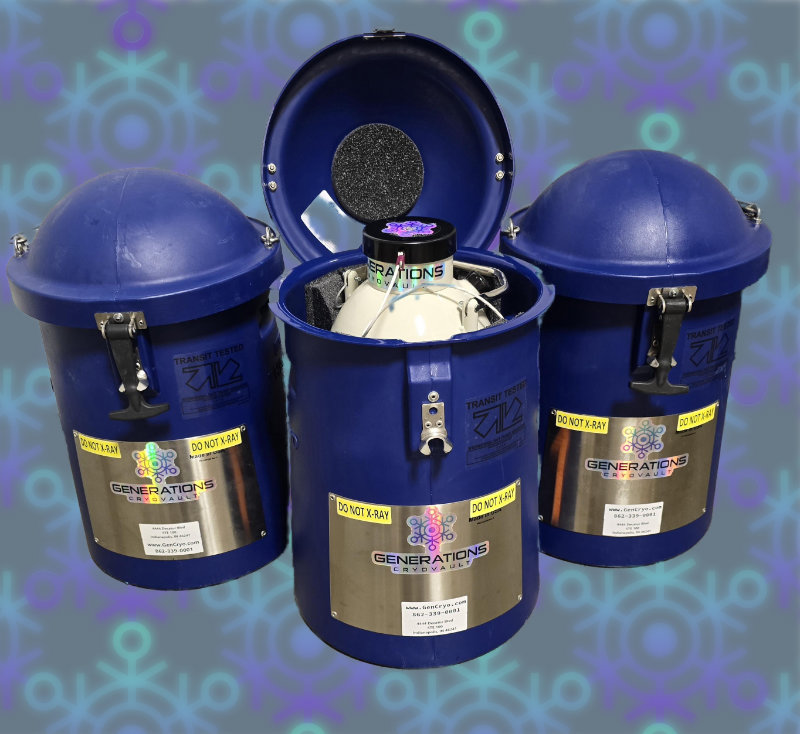
“What make and model tanks do you use for shipping?” [You want to ensure your provider uses high-quality containers. Generations CryoVault uses tanks from MVE Biological Solutions, a global leader in cryogenic products.]
“When was the last time the tank was validated? Can I see the records?” [Regular validation greatly reduces that chance that a tank will fail, resulting in damage to your tissues, during shipping.]
2. Security and Chain of Custody Matter
Your tissues shouldn’t be treated like ordinary cargo. A trusted embryo storage facility uses documented chain-of-custody protocols at every step to prevent mislabeling or loss. That means every handoff, from the clinic to the courier to the receiving facility, is documented. Security measures are built in to ensure your tissues are never misplaced, mislabeled, or left vulnerable.
Questions to ask:
“What do you do to ensure chain of custody? Can I see an example of your documentation?” [If they hesitate, that’s a red flag.]
3. Proper LN₂ Bath Transfers Protect Against Warming
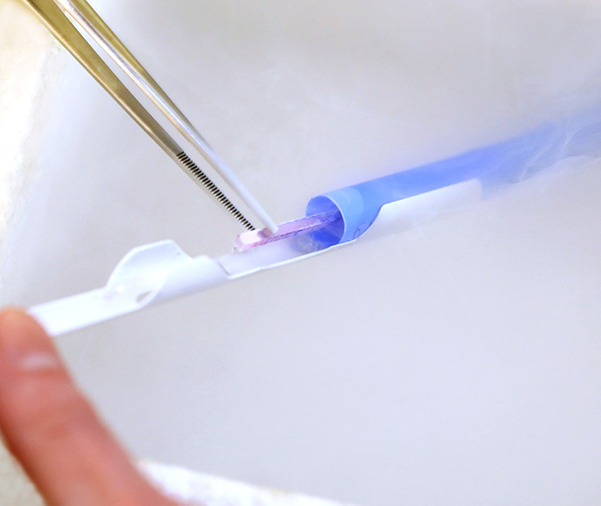
When embryos, eggs, or sperm are moved from a storage tank to a shipping container (or back again), the safest method is through a liquid nitrogen (LN₂) bath transfer protocol. This means the specimen vials or straws stay submerged in liquid nitrogen the entire time, never exposed to room temperature air.
Unfortunately, many general logistics providers skip this critical step. They’ll review specimen labels or numbers while the tissues are exposed, which can cause unnecessary warming events — even if only for seconds. Each warm-up, however brief, increases risk to viability.
At Generations CryoVault, our team follows strict LN₂ bath procedures both during departure and arrival, so your embryos, eggs, or sperm remain protected in ultra-low temperatures throughout the handoff.
Questions to ask:
“Do you transfer specimens through an LN₂ bath when moving them between storage and shipping containers?”[If the answer is anything other than “yes, always,” your tissue may be exposed to damaging temperature fluctuations.]
“How do you confirm specimen numbers or labels during the transfer?” [Providers should verify inside an LN₂ bath, not in open air.]
4. Coordination with Clinics is Key
Safe shipping depends on paperwork, timing, and communication between your storage facility and clinics. The sending and receiving clinics must be aligned on timing, authorization forms, and documentation. You should not be left to manage these logistics yourself. A reputable reproductive tissue logistic provider handles this coordination on your behalf.
Questions to ask:
“How do you coordinate with my clinic?” [If you’re expected to do more than sign paperwork, you’re doing too much.]
5. Regulatory Compliance Protects You
Compliance with FDA, CDC, and ASRM standards is essential. Some providers also maintain ISO 9001 quality management systems for added oversight. This protects you legally and ensures your reproductive tissue shipping and storage provider is maintaining the highest quality and accountability.
Questions to ask:
“What regulatory bodies do you follow?” [If they don’t mention FDA, CDC, or ASRM, keep looking.]
“Is your system ISO 9001 compliant?” [Generations CryoVault is while many providers are not.]
6. Risk Management is Built Into the Process
When shipping reproductive tissues, packaging is not just about convenience, it is about protection. Unlike cardboard boxes, which can be crushed or tipped, Generations CryoVault uses mushroom-shaped cryogenic containers built for safety. Their shape prevents rolling or sideways storage, protecting your oocyte storage, embryos, or sperm during transit. This level of foresight ensures your tissues remain secure throughout the entire journey.
Questions to ask:
“What type of shipping container do you use and why?” [Only cryogenic-grade, purpose-built containers are acceptable. Be wary if the provider ever ships in cardboard boxes.]
“How do you ensure containers stay upright?” [Design matters for tissue safety.]
7. Not All Insurance is Equal
Insurance is often overlooked and can be confusing in the world of tissue transport, but it is one of the most important safeguards for peace of mind. Many providers rely on weak self-insurance or vehicle coverage. Generations CryoVault automatically includes $50,000 of coverage for each transfer, backed by an A+rated international carrier. This ensures your frozen embryo shipping, oocyte shipping, or sperm shipping is protected by a legitimate insurer.
Questions to ask:
“How much insurance is included automatically?” [Beware if the answer is “none.”]
“Who underwrites your insurance policy?” [Self-insurance is not enough.]
8. Real-Time Tracking and 24-Hour Temperature Monitoring
Peace of mind comes from knowing your tissue is safe every step of the way. At Generations CryoVault, our shipping containers are equipped with real-time location tracking and 24-hour temperature monitoring. This allows us to verify that the environment remains stable during transit, while also keeping you informed about the location of your tissue at any given time. Constant oversight means you do not have to wonder where your tissue is or whether it is protected. You will always know.
Questions to ask:
“Do your containers include both location tracking and temperature monitoring?” [Both are critical.]
9. You Deserve Concierge-Level Service
Shipping during fertility treatment can be stressful. Concierge-level providers guide you, provide updates, and act as your partner not just your courier. This applies whether you’re transferring embryos, arranging long-term embryo storage, or optimizing your embryo storage cost.
Questions to ask:
“Who will be my main point of contact?” [You want personal accountability, not a call center.]
“How do you keep me informed?” [Look for proactive updates, not just reactive ones.]
“Can you walk me through the full transfer process?” [Confidence and transparency mean competence.]
10. Plan Ahead When Possible
While urgent transfers can be done, advance planning ensures smoother paperwork and keeps you in control. This allows time for clinics to complete the necessary paperwork, for shippers to schedule transport, and for you to explore coverage options.
Questions to ask: