
The in-vitro fertilization (IVF) journey is an emotional and medical marathon. For many hopeful parents, one of the most intense moments is waiting for the results of Preimplantation Genetic Testing for Aneuploidy (PGT-A).
You wait for the call, hoping for a long list of euploid (chromosomally normal) embryos. But what happens when the results are not what you hoped for? What if the embryologist tells you your embryos are aneuploid or mosaic?
For many, this news is followed by a devastating recommendation: "These embryos are not viable. We will not transfer them, and we will not store them. We recommend destroying them."
This single conversation can feel like the end of the line, but we want you to know that it's not.
If you are someone who would like to have children or a couple facing this decision, you need to know two things:
1) "Abnormal" doesn't always mean "impossible."
2) You have storage options, even if your clinic says no.
Let’s break down the complex science, bring light industry pressures that lead to these recommendations, and show you how you can protect every single one of your chances to build a family.
Understanding the "Abnormal" Embryo: Aneuploid vs. Mosaic
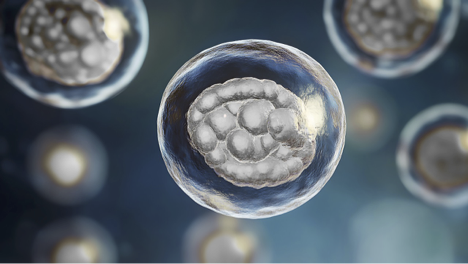
When an embryo is created, it's meant to have 46 chromosomes (23 pairs). PGT-A is a screening test where a small number of cells are biopsied from the embryo (usually from the part that becomes the placenta) and tested for this number.
The results typically fall into three embryo types:
• Euploid (Normal): The cells in the sample have the correct number of chromosomes. These are the embryos clinics prioritize for transfer.
• Aneuploid (Abnormal): The cells in the sample have an incorrect number of chromosomes (either too many or too few). A common example is Trisomy 21, which leads to Down syndrome.
• Mosaic (Abnormal): The embryo is a "mosaic"—it contains a mix of chromosomally normal (euploid) cells and abnormal (aneuploid) cells.
For decades, both aneuploid and mosaic embryos were grouped together as "abnormal" and considered non-viable, but that’s not exactly the full story.
The body is incredibly wise. Most often, when an aneuploid embryo forms naturally, it will result in implantation failure or a first-trimester miscarriage. The body recognizes a problem and stops the pregnancy.
However, PGT-A is not a perfect diagnostic tool. The biopsy only samples 5-10 cells from the trophectoderm (the future placenta), not the inner cell mass (the future baby). It's possible for the embryo to "self-correct" or for the sampled cells not to represent the embryo's true potential.
Because of this, studies and patient stories have shown that mosaic embryos can, and do, result in perfectly healthy, live births. While the chances are lower than with a euploid embryo, they are not zero. For a parent with no euploid embryos, a 20% or 30% chance is infinitely better than the 0% chance that comes with destruction.
The conversation for aneuploid embryos is similar, though distinct. When aneuploid embryos are a family's only option, the decision is no longer about statistics - it's about their only chance for a child. This path may include the known possibility of having a child with a chromosomal abnormality, a reality many families consciously and lovingly embrace when the alternative is no child at all.
The Industry's Nuanced Decision: Success Rates and Value
If mosaic (and even some aneuploid) embryos have potential, why are clinics so quick to suggest destruction? The answer is a complex combination of business metrics and medical judgment.
The Success Rate Factor
The fertility industry is highly competitive, and clinics are judged by their "success rates," which are published by bodies like the Society for Assisted Reproductive Technology (SART). Transferring an at-risk embryo raises the probability of a miscarriage or failed transfer, which negatively impacts these critical statistics.
The Patient Value Factor
Doctors also operate under a duty to manage patient expectations and costs. Transferring an aneuploid or mosaic embryo still involves the expense of a Frozen Embryo Transfer (FET), including medications, clinic fees, and the transfer procedure itself, all with a statistically lower chance of success. A physician may genuinely believe they are protecting a patient from wasting thousands of dollars on a low-probability outcome.
This logic is understandable from a statistical or financial perspective, but it ignores the patient's emotional reality. A hopeful mother with ample euploid embryos will understandably never choose the abnormal one. But for the mother who has only aneuploid and mosaic embryos, the consideration is different. She is being told to destroy her only chance, not just because of the medical risk, but because of a business and cost model that often prioritizes statistics and perceived value over potential.
The Storage Crisis: When "No" Means Destruction
The problem is now moving beyond just implantation. Fertility clinics, hospitals, and even long-term cryopreservation facilities are refusing to even store these embryos.
We hear from patients every day - their clinics have told them, "We will not keep these embryos on-site. You must decide to destroy them or move them." But when they call other storage facilities, they're hitting another roadblock - "we do not accept aneuploid or mosaic embryos."
This practice effectively forces a family's hand, eliminating any chance to:
• Wait for new science to emerge that better understands mosaicism.
• Find a different doctor or clinic willing to do the transfer.
• Take time to make a decision without pressure.
• Donate the embryos to science (an option many prefer over simple destruction).
This is where Generations CryoVault is taking a stand.
Generations CryoVault: We Do Not Discriminate
We believe that PGT-A results are information, not a final judgment. We believe every patient deserves the right to save all their embryos, because this is a personal decision that should be your choice.
Generations CryoVault does not discriminate based on PGT-A results. We will store your aneuploid and mosaic embryos. We have built our service to solve the exact problems you are facing, offering unique solutions that other facilities won't:
###
Transparent Pricing
We do not charge separate fees based on the number of embryos you store. Our pricing is straightforward, and we do not upcharge for storing potentially infectious tissues, ensuring cost is never a barrier to saving your family-building options.
The "Split Cohort" Solution (When Your Clinic Refuses)
• The Problem: Your clinic will continue to store your "normal" embryos, but is pressuring you to destroy your "abnormal" ones, or they will charge you for two separate storage accounts.
• Our Solution: We will work with you and your clinic (with special paperwork) to "split your cohort." This means your clinic can keep your euploid embryos, and we will accept only your aneuploid and mosaic embryos for safe, long-term storage.
• Why We Do It: This is not the industry preference. It is logistically complex, but we do it because your only other option shouldn't be destruction. We provide the lifeline your clinic won't.
The "Peace of Mind" Solution (Total Storage)
• The Problem: You have a mix of euploid, mosaic, and aneuploid embryos and want to keep them all safe, but your clinic will only transfer the euploid ones.
• Our Solution: Move all of your embryos to Generations CryoVault. We will store your entire cohort together, safely and affordably.
• The GenCryo Difference: When you are ready for your transfer, we will ship only your selected euploid embryos to your clinic. Your mosaic and aneuploid embryos remain safely with us, preserved for your future. If your euploid transfers don't result in a pregnancy, you have your "at-risk" embryos as a second option—a chance you would have been forced to destroy.
Why Generations CryoVault? Your Accessible, Trusted Option
When you are fighting for every chance to build your family, you need a storage partner that puts your tissues and choices first.
Generations CryoVault was established to simply be the best long-term fertility storage option for both patients and clinics. As clinics and other storage providers sell-out to private equity and turn to storage as a profit-center, GenCryo remains employee-owned with a client-focus. Our primary concerns are you and your tissues, not investors. This focus delivers exceptional customer service and competitive prices, making Generations CryoVault the most accessible option in the industry.
Being affordable and focusing on the patient does not come as a trade-off for security and tissue safety. As the only fertility storage company in the U.S. that is certified to ISO 9001:2015 standards, our processes, record keeping, and facility are independently audited and assessed and certified to be at the highest quality standard. Why pay more for less with other storage companies?
Your Embryos. Your Choice. Your Hope.
The IVF journey is yours. The science of genetics is complex, and "abnormal" is a label that deserves to be questioned. A PGT-A result is a single data point, not the end of your family’s story.
You have a right to take time and consider your options. You have a right to wait for new science to emerge. Most importantly, you have a right to find a storage partner who respects and supports your choices.
Ready to Take the Next Step?
If you are facing pressure to destroy your aneuploid or mosaic embryos, or if you simply want a storage partner who will protect all your family-building options, contact us today.
➡️ Click Here to Learn More About Our Embryo Storage Solutions